Manuscript Study:
Summa de Casibus Conscientie --- Confessionale
Melissa Stone
San Jose State University
LIBR280_12
Professor Beth Wrenn-Estes
Table of Contents |
| Figure 1: Summa de Casibus Conscientiae --- Confessionale |
Not everything to
learn from a manuscript is gleaned from understanding its text. A manuscript, written in a language that is
no longer understood by the majority can still bring to light a rich and
interesting history. Take the manuscript
being analyzed here; a combination of two related texts of Dominican origin
called Summa de Casibus Conscientiae ---
Confessionale. By combining what
information we see on the page with the history surrounding its creation, we can gain a
better understanding of the written word at the time that this manuscript was
produced. Summa de Casibus Conscientiae --- Confessionale was written in the Dominican convent of San
Donato which is near Urbino, Italy sometime between the years of 1385 and 1399
(OCLC, 2013). It is comprised of two
major Dominican treatises on Canon Law (OCLC, 2013). This paper well attempt to analyze the manuscript's production within a historical context in order to gain a better understanding of the Italian medieval manuscript. As we analyze the text it is important to
note that references to certain folios are based on the modern foliation which
is faulty but still considered usable as a reference point.
Europe – 14th and 15th centuries
Though the
manuscript was not dated by its scribe, it is believed to be written sometime
between the years 1385 and 1399. At
this time, elsewhere in Europe, the Ming Dynasty was just beginning and the Hundred Years War between France and England was in full swing (Pearson Education, 2007, Encyclopaedia Britannica, 2013). Religious reformations were also taking place
around this time. The Great Schism, where
rival popes in Rome and France were fighting for control of the Roman Catholic
Church, began in 1378 and the religious reformer John Wycliffe was busy translating
the Bible from Latin to English (Pearson Education, 2007).
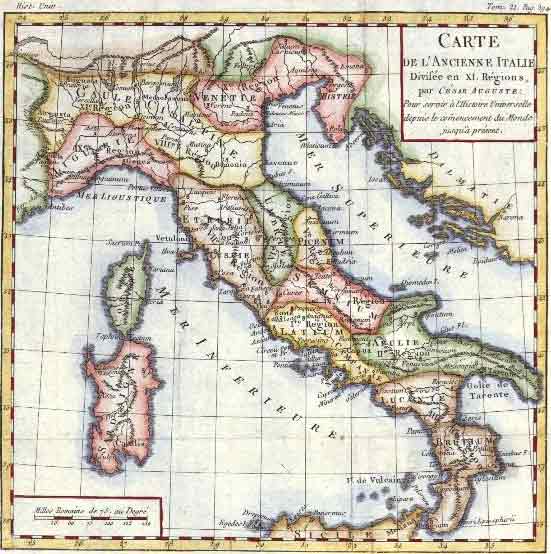 |
| Figure 2: Italy (Wikimedia, 2013) |
Italy, during the 14th and 15th
century, was a place of turmoil and as such it is considered extremely
difficult to discuss Italy’s
history as a whole during this period (Larner, 2013). The country was politically divided between
six major, and 15-20 minor, political powers which produced an
overwhelming trend of local patriotism (Larner, 2013). Despite the lack of loyalty to Italy as a
whole, the country had a thriving economy through the 14th and early
15th century (Larner, 2013).
This was especially exceptional given that the country was also mired with a string of famines between the
years of 1339-1375, large-scale wars, and the arrival of the Black Death which
ravaged Italy
starting in the mid-14th century (Larner, 2013).
But Italy’s economic
growth did not wane. This growth coupled with cultural change fostered the growth of the Renaissance, which began towards the end of
the 14th century (Larner, 2013).
The Renaissance brought about the idea of ‘rebirth’ and it was during
this time that philosophers believed the medieval man was being reborn into the
modern man (Larner, 2013). The Early
Italian Renaissance also marked the emergence of humanism, or the study of the
humanities (grammar, rhetoric, history, poetry, moral philosophy, etc.) as read
in Classical Latin and, sometimes, Greek texts (Larner, 2013). Within the many universities that were thriving at ths time, the Order of Preachers, were also growing in popularity.
.svg) |
| Figure 3: Shield of Dominicans (Wikimedia, 2013) |
The Orders' popularity and quick growth led to changes in their doctrine. One such change was the rise of Mysticism, particularly in Italy and Germany (Gardner, 1908). One popular figure
associated with Dominican Mysticism at the end of the 14th century
was St. Catherine of Siena (Gardner, 1908). She was a Dominican nun who in 1366
experienced what she called a ‘mystical marriage’ to Jesus (Gardner, 1908). And after this and several other religious
experiences, Catherine became a counselor and spiritual teacher who dedicated
her life to peace and service (Gardner,
1908). The Dominican Order produced
also produced several well-known theologians such as Thomas Aquinas. Two such theologians are Bartholomew of San Concordio and Johannes von Frieburg, the authors of the manuscript being analyzed.
As the manuscript
is comprised of two texts, there are two separate titles. The title of Text 1 is Summa de Casibus Conscientiae which directly translates to Total cases of conscious (Google
Translate). The word summa actually refers to the text being
a comprehensive treatise by the author so it may be more correct to translate
the title as "The sum of the cases of consciousness" (“Summa,”
n.d.). The second text is titled Confessionale which translates to
Confessional (Google Translate).
These texts are
linked together, not just by their scribe, but by their subject matter. Both are related to the study of the human
conscience. The study of the force and
scope of moral obligations in the context of human action, or casuistry, was a
popular topic for theologians during the medieval era (Encyclopedia of Science
and Philosophy, 2013). Cannon law, combined
with the analysis of the problems of human life, in relation to the Christian conscience
gave rise to casuistical ethics and the emergence of casus conscientiae . Casus conscientiae, or cases of consciousness, is the sensitive
analysis of the problems of human life and the conflicting options that could
be taken. (Encyclopedia of Science and Philosophy, 2013).
Casuistry was further set into
medieval theology after the Fourth Lateran Council in 1215 which made it
mandatory for all members of the faithful to go to confession before a priest
once a year (Encyclopedia of Science and Philosophy, 2013). This change fueled a new vein of study
related to the cases of consciousness: the summa
confessorum (Encyclopedia of Science and Philosophy, 2013).
Summa confessorum are manuals written for pastors who were responsible
for hearing confession (Encyclopedia of Science and Philosophy, 2013). They contain detailed recommendations on the
types of sin and their appropriate levels of penance (Encyclopedia of Science
and Philosophy, 2013). The second text
in the manuscript, Confessionale, is
an example of this type of text.
Interestingly, this particular text was not only concerned with the
usual social groups of nuns, laborers, merchants, etc., but was also concerned
with identifying what was sinful in the speech and actions of the entertainers
of the time (Craun, 1997). So we can see why these texts may have been
chosen to be combined. Furthermore, it
is said that Confessionale was
actually the bases for Summa de Casibus
Conscientiae (Volz, 1907).
 |
| Figure 4: Bartholomew of San Concordio |
Summa de Casibus Conscientiae was
written by Bartholomaeus Pisanus or Bartholomew of San Concordio (OCLC, 2013). He was a Dominican theologian and philosopher
who was born in San Concordio, Italy (near Pisa) in 1262 (Cooney, 2003). Bartholomew joined the Dominican order in
1277, and studied in Pisa, Bologna,
and even Paris, France (Cooney, 2003). Throughout
his career, he wrote and translated many works. Summa de Casibus Conscientiae and De
documentis antiquorum are
considered his major literary contributions (Cooney, 2003). In fact, Summa de Casibus Conscientiae was
considered to be highly useful at the time, possibly due to Bartholomew’s clear
and concise writing style (in this instance the entire text is alphabetized)
(Volz, 1907). Additionally, the text is
said to have conformed to the newer laws and canons of his time (Volz,
1907). Aside from theological texts,
Bartholomew also wrote treatises on virtues and vices, on Latin
pronunciation and orthography, and on the tragedies of Virgil and Seneca
(Cooney, 2003). He also lectured at the Universities in Pisa,
Florence, and Lucca (Cooney, 2003). On June 11, 1347, at the age of 84, Bartholomew
of San Concordio died in Pisa
(Cooney, 2003).
 |
| Figure 5: Johannes von Freiberg |
The second text, Confessionale was written by Johannes
von Freiburg, also known as John of Freiburg, J. Rumsik, Choriantus, or
Teutonicus (Library of Congress, n.d.). Although
it was difficult to gain much information about Johannes von Freiburg, it was
possible to discern that he was a Dominican theologian and canonist born in a
small city in Germany,
called Haslach (Boehm, 1992). He was
born in 1250 and died in Freiburg,
Germany, in
1314 at the age of 64 (Boehm, 1992).
Johannes wrote several texts and his Summa
Confessorum and Confessionale are two that have lasted through time. Bloomfield’s
Incipits list 69 extant manuscripts
of Confessionale and seventy of Summa Confessorum (Craun, 1997).
Shortly after the author's deaths, the text were combined into a single manuscript.
After the rise of
universities in the 12th century, it was common for a manuscript to
be split into sections to be written by different scribes (Clemens and Graham,
2007). This system of copying single sections to be put together later is called
the pecia system, and it was very
common during the 14th and 15th centuries (Clemens and
Graham, 2007). This manuscript represents
an exception to this system as it was written by one scribe only. Though little is known about him, the colophon
he wrote tells us that his name was Guilgelmus (University
of California, Berkeley, n.d.).
The colophon,
written by Guilgelmus, is on folio 211r and it reads as follows: "Qui
scripsit scribat semper cum Domino vivat. Vivat in celis Guilgelmus domino
felix." This roughly translates as "Who records that he wrote may
live always with the Lord. Guilgelmus
Long live the lord in heaven happy" (Google Translate). Though oftentimes a colophon will include information about the production of a manuscript, this colophon is an example of one that gives
little information (Clemens and
Graham, 2007). . But the colophon is not the only place where we can gain
information about the manuscript’s production.
The pages of this
manuscript are parchment. We know this
because of the prominence of hair-follicles and yellow tint to several of the
pages. Parchment is animal skin which
has been prepared for writing. This is
done by first cleaning and de-hairing the skin, often times by being soaked in
a lime solution for several days (Clemens and Graham, 2007). Once cleaned, the skin is attached onto a
frame, called a herse, and stretched
tight until it dries (Clemens and Graham, 2007). After it is fully dried, the parchment could
be removed from the stretcher and cut into sheets for writing. Often, parchment will have uneven edges where
there was not enough skin to create a full rectangular sheet or oval holes from
past injuries or from cuts from the parchment maker (Clemens and Graham, 2007).
 |
| Figure 6: Uneven parchment with an oval hole |
In this
manuscript, most of the pages are whole and complete, though there are some
pages which are uneven, or have oval holes in them. We know that the holes and uneven edges were
present at the time of writing because the scribe wrote around the holes and
compensated for the missing corners. Additionally,
while most of the parchment is contemporary with the book production, there are
end pages that were added during the binding process and are not original to
the book.
There is no
indication of any sizing used and, in fact, it is likely that sizing was not used. This is because the process to make
parchment during the time that the manuscript was produced does not indicate sizing
as one of the steps of production (Clemens and Graham, 2007). This does not mean that the parchment was not
prepared, in some way, to accept ink. In some cases,
scribes were known to rub the skin with a pumice stone and then with chalk to
prepare the skin for writing (National Archives and Records Administration,
2013). No indication of this process
could be determined in the manuscript being studied.
It is most likely
that iron-gall ink was used to write Summa
de Casibus Conscientiae --- Confessionale. Iron-gall,
or oak-gall, ink was preferred for parchment because its acidic properties
would etch into the parchment making it less likely to flake off the surface (Clemens
and Graham, 2007). Iron-gall ink is made
by soaking oak-galls in a liquid and mixing the resulting liquid with a
metallic salt which would produce the desired black color (Clemens and Graham, 2007). But black is not the only color present in
the manuscript. There are many other
colored pigments such as red, blue, green, pink, and even some gold. The exact composition of these pigments is
unknown partially because the methods for creating these pigments were varied
and could be made from organic or inorganic compounds (Clemens and Graham, 2007). An example of the extraordinary lengths that
some would go through to get the right colors is the recipe for kermes, a red
pigment which was made from the larvae of scale insects which were harvested
from Kermes oak trees on St. John’s Day (June 24) (Clemens and Graham, 2007).
 |
| Figure 7: Top right shows modern foliation |
There are 232 leaves to complete the
manuscript. The first 214 leaves are comprised
of Summa de Casibus Conscientiae with
the remainder dedicated to Confessionale. The leaves measure 220 x 144mm. The quires of the book are folded in
such a way that the hair-sides or flesh-sides of the parchment are facing each
other. There appears to be no contemporary
numbering of the leaves of the manuscript. There is a modern
foliation, written in pencil on the top right corner of the pages, but five
leaves at different points in the text are unnumbered so it is inconsistent. The text block which measures 141 x 112mm, is written on ink-ruled
lines which are separated into two columns.
Each column is 45-lines long. Despite the fact that by the end of the 13th
century it was general practice to begin the text below top line, this text
begins above top line. (Clemens and Graham, 2007). The
margins around the text are wide, with the largest margin along the bottom
edge. Along with the rulings, you can
also see the prickings that were made when the scribe was creating the text.
 |
| Figure 8: Red Moroccan binding |
 |
| Figure 9: Signature of Marcelin Lortic |
Pierre Marcelin Lortic was a Parisian
bookbinder during the 19th century.
He was born in 1822 and died in 1892 in Paris at the age of 80 (Trumble, 1892). An obituary written the year of his death
from a semi-monthly newsletter called The
Collector states that Lortic was one of the great classical artists in
bookbinding (Trumble, 1892). He had a particular
talent with morocco binding and was even appointed as a Knight of the Legion of
Honor shortly before he retired from the craft (Trumble, 1892). We know that this manuscript was bound by Marcelin
Lortic because his signature is gilt tooled on the inside of the front cover’s
bottom edge. The title is also gilt
tooled on the spine and gilt border decorations on the edges of the cover and
the inside along the pastedown.
 |
| Figure 10: Gilt designs |
The script of this
manuscript is considered to be an example of textualis libraria script with
cursive elements, and is considered to be very close to the humanistic script.
 |
| Figure 11: Sample of script |
Textualis and libraria
are two descriptive terms developed by paleographers, those that study ancient
writings and inscriptions, to describe Gothic or Blackletter script variations
(“Paleography,” n.d.). Textualis refers
to the most formal type of Gothic Book Hand (Tillotson, 2011). However, adding the term libraria means that
the formality of the script is considered middle range with the bottoms of the
letters being flicked up rather then forming little blocking feet as in the
most formal textualis script (Tillotson, 2011).
In Italy,
the form of script most preferred for bookhand in the Gothic period is
Rotunda. This script is generally
characterized by its rounded appearance and the fact that the last minims of the
m and n are the only ones that end in an upward stroke (Clemens and Graham,
2007). The other minims end flat, as do
the shafts of the f, h, r and tall s (Clemens, Graham, 2007). There is also widespread use of the biting of
the bows where two letters whose bows face each other are combined so that
those bows share one stroke (See Figure 11, last word of line 8) (Clemens and Graham, 2007). Other characteristics of Italian Gothic Rotunda
are the use of the 2-form r directly following an o (See Figure 11, line 3 'corpum') and the use of the 3-shaped
form of m to stand for the letter m at the words-end (See Figure 11, line 3 'dehim') (Clemens and Graham,
2007).
 |
| Figure 12: Sample of script |
This manuscript is
not a true example of the Italian Gothic Rotunda script. In fact, it is more of an example of the evolution
of Italian scripts from Rotunda to Humanistic.
As the Digital Scriptorium notes, there are cursive elements that are
close to Humanistic script (University
of California, Berkeley, n.d.). The manuscript was created around the end of
the 14th and beginning of the 15th century, which is the
same time that Italian Humanistic script was being developed. It evolved in direct response to the literary
figures of the time who felt that Gothic scripts were too difficult to read
(Clemens and Graham, 175). As a result,
Italian Semigothic script and Italian Humanistic Bookhand evolved. We can see this evolution in the manuscript
when you look at the letter a, as well as the scribe's use of the 3-shaped form. The a resembles the Semigothic or Humanistic
scripts, a half-uncial a (Figure 11 shows several examples of a uncial a) (Clemens and
Graham, 2007). Additionally, in Semigothic
Italian script, the 3-shaped form is used for not only for the letter m at word
endings, but also as abbreviations for plural endings such as –us and –ue (Figure 11, line 3, shows several examples) which
we see in this text (Clemens and Graham, 2007).
This is contrary to Italian Gothic Rotunda which would favor a backwards
c that attaches to the shoulder of the preceding letter as the preferred
abbreviation for the suspended dative and ablative plural –us (Clemens and
Graham, 2007).
 |
| Figure 14: Second Incipit from Text 1 |
 |
| Figure 13: Owner's Mark |
Aside
from the style of text, there are some interesting examples of corrections and
text from later hands in the manuscript.
On the first page, it appears that there is some text that was written
in the center margin and then erased (See Figure 23). There are
also instances where a phrase has been struck through with one line of red ink
or there are corrections written in the margins (See Figure 14, line 10). Additionally,
on folio 232, there is an ownership note by a 15th century hand which reads:
"Loci Sancti Donati prope Urbinum" (University
of California, Berkeley). This roughly translates to “Local Saint
Donatus, near Urbino” (Google Translate).
That same folio also has the number "20041" in brown ink
(Digital Scriptorium, 2013).
 |
| Figure 15: Rubrication |
Both of the texts
include rubrication, or the process for providing a manuscript text with a
title, and was commonly written in red (Clemens and Graham, 2013). The titles, which could be beginning and
ending titles (sometimes referred to as an incipit and explicit) and the ink
that was generally used for rubrication is red lead (Clemens and Graham,
2013).
In Summa de Casibus Conscientiae, there is a rubricated
incipit and explicit. Confessionale has a rubricated incipit and as well as
rubricated headings for each chapter. The
text also has an explicit, but it is not in red ink. Lastly, both texts have a rubricated blessing
at their respective ends that reads as follows: “yhs ؞
Maria.”
 |
| Figure 16: Incipit for Summa de Casibus Conscientiae |
Confessionale’s incipit is as follows:
“Incipit prologus super confessionalem fratris Iohannis Theutonici ordinis
Predicatorum adiunctum de novo summe confessorum” (See Figure 15). This roughly translates to: “Prologue begins on confessional brother John
joined the new order
of Preachers Germans highly
confessors” (OCLC, 2013).
 |
| Figure 17: Final sentence of first text |
 |
| Figure 18: Explicit Confessionale |
Text 2’s explicit
is as follows: “Explicit confessionale fratris Iohannis Theutonici de ordine
Predicatorum. Deo gratias amen. Iesus Maria” which roughly translates to “It
unfolds confessional brother John Theutonici of the order of Preachers. Thanks
be to God, Amen. Jesus, Mary” (Google Translate). The incipits and explicits are not the only
decoration in the manuscript. There are
many other examples throughout both texts of the manuscript.
 |
| Figure 19: Example of initial decorations in the manuscript |
In both texts, the
first initial is a historiated initial and it is a depiction of the author of
the text. In text 1, the 10-line initial
shows Bartholomew of San Concordio facing sideways, half-length in a black Dominican
robe (See Figure 4). He is holding a red book. In text 2, Johannes von Freiburg is depicted
in a 6-line initial (See Figure 5). Again, he is
depicted in a Dominican black robe and is holding a red quill. While the historiated initials are by far the
most elaborately decorated initials, there are several more that are decorated within
the texts. In Summa de Casibus Conscientiae, each section of
alphabetically-arranged text begins with a 4- to 5-line painted initial on a squared
ground of white-patterned blue ink. The initial has leafy extensions into the margins. After that first more elaborate letter, each
section begins with a three-line initial in alternating red or blue with pink ink
designs extending off the letter and into the margins. In Confessionale,
the decorations are far simpler but are in the same style as the first
text. After the historiated initial, each
new heading begins with a rubricated title and each section within that heading begins with the same style of initial; a three-line letter in alternating red or
blue with pink ink decoration extending into the margin. Both texts also have other decorations within
the text block and on the margins.
 |
| Figure 20: Literae notabiliores |
Literae notabiliores is a term developed
by paleographers which literally translates to more noticeable letters (Clemens
and Graham, 2007). These letters were
meant to highlight various divisions, sections, and subsections within a text
and there are various methods with which a scribe may do this (Clemens and
Graham, 2007). Some examples of literae
notabiliores can be seen in this manuscript.
For instance, the scribe adds a line of red or blue ink over the
letter he wishes to highlight (See Figure 18, 4th line from bottom). There is also at least
one instance where a word is between what appears to be quotation marks which are written in red
ink (See Figure 20).
 |
| Figure 21: Example of Line Fillers |
Line fillers are
exactly as they sound. They are markings,
often minims, which would be added to a line in order to create a justified
right margin (Clemens and Graham, 2007).
In this manuscript, the scribe used minims that very closely resemble
the letter i (See Figure 21 at end of rubrication).
 |
| Figure 22: Catchword |
Aside from the
literae notabiliores and line fillers, there are other decorations in both
texts such as paraph marks in alternating blue and red ink (See Figure 19). There are also catchwords (See Figure 22) enclosed in black
and red radiating flourishes, in the middle of the bottom margin and on reverse
of the page. There are also small floral markings (See Figure 11) on the margins that may indicate
important sections of the text though this is not fully understood. While the decorated initials and letters
create a beautiful text, one page stands above the rest in decoration; the
first page.
 | |
| Figure 23: only illuminated page |
The only fully illuminated
page in the manuscript is the first page of Summa
de Casibus Conscientiae. The entire
page is framed with a full illuminated border which is colored with pink, blue,
and green ink and goes all the way around the page. The bottom and left margins are more elaborate,
but on all four margins there are leafy extensions, gold benzants and whiskery
penwork emanating from the banner.
Summa de Casibus Conscientiae ---
Confessionale is a beautifully preserved example of a late 14th
century Italian medieval manuscript. It
is also a wonderful example of Dominican canonical law showing that at the
time, confessional manuals were an important part of pastoral life and that the
Dominicans, as did many others at the time, focused on sin and its affect on human
nature. Without
understanding the Latin on the pages, one can gain a significant amount of information which colors our understanding of the medieval manuscript. Aside from an appreciation for the art of
manuscript writing, we can see the cultural trends of the time such as the evolution of Italian Gothic Rotunda script
to Italian Semi-gothic and Humanistic script.
Interestingly, this same evolution fits in with what was going on
culturally during this period. Humanism
was a major part of the Renaissance period and at the time the manuscript was
being written, the Renaissance was just beginning. And so, just knowing the script style without
understanding the words can show how a manuscript is interconnected with its
historical place and cultural development.
And as many of us will never understand the language of the medieval
manuscript without the help of the ever faulty Google Translate, an
understanding of manuscript production throughout history can give us a sense
of our cultural history when thumbing through these ancient pages.
Bauman Rare Books. (2013). Glossary. Retrieved from http://www.baumanrare
books.com/rare-book-collecting/glossary.aspx
Boehm, R. (1992). JOHN of Freiburg.
In Biographisch-Bibliographisches
Kirchenlexikon.
Retrieved from http://www.bautz.de/bbkl/j/Johannes_v_fr.shtml
Cooney, J. (2003). Bartholomew of San Concordio (of Pisa). New Catholic
Encyclopedia. (2nd
ed., Vol. 2., pp. 126-127). Detroit: Gale.
Craun, E. (1997). Lies,
slander and obscenity in medieval English literature: Pastoral
rhetoric
and the deviant speaker [Google Books reader]. Retrieved from http://books.google.com/books?id=7oRMLlzkjUC&pg=PA165&lpg=PA165&dq=summa+confessorum+Confessionale&source=bl&ots=bSeAHrMtX3&sig=qhChYeML_eCrQ
PGxHpfZTVLZH5k&hl=en&sa=X&ei=am4zUeOWCMKKjAKE-4HgBg&ved=0CDMQ6AEwAA#v=onepage&q=summa%20confessorum%20Confessionale&f=false
Encyclopaedia Britannica. (2013). Hundred Years War. Encyclopaedia Britannica Online
Academic
Edition.
Encyclopedia of Science and
Philosophy. (2013). Casuistry. The
Encyclopedia of Science
and Philosophy. Retrieved from http://science.jrank.org/pages/7542/
Casuistry.html
Gardner, E. (1908). St. Catherine of Siena. The Catholic Encyclopedia. Retrieved
from:
Images of manuscript courtesy of Berkeley, University of California, The Bancroft Library,
Robbins
MS 135.
http://digital-scriptorium.org
Images of Italy and shield of the Dominican Order courtesy of Wikimedia Commons.
http://commons.wikimedia.org/
Larner, J. (2013). Italy in the 14th and 15th
centuries. Encyclopaedia Britannica
Online
Academic
Edition.
Library of Congress (n.d.). Johannes, von Freiburg, d. 1314.
In Library of Congress Name
Authority
File. Retrieved from http://id.loc.gov/authorities/names/n81003668.html
National Records and Archives Administration. (2013). What
is the difference between
parchment, vellum, and paper? The U.S. National Archives and Records
Administration.
Retrieved from www.archives.gov/preservation/formats/paper-vellum.html
OCLC. (2013). Summa de casibus conscientiae; Confessionale.
In World Cat. Retrieved
confessionale/oclc/84650649
Paleography. (n.d.). In Merriam-Webster’s
online dictionary. Retrieved from
Pearson Education. (2007).
1300-1399 (A.D.) World History. Information
Please®
Database. Retrieved from http://www.infoplease.com/ipa/A0001216.html
#ixzz2Lq6OXUHo”
Summa. (n.d.). In Merriam-Webster’s
online dictionary. Retrieved from
Tillotson. D. (2011). Why Paleography Sucks 2. Medieval Writing. Retrieved from
Translations taken from Google Translate, where specified,
in February and March, 2013.
Trumble, A. (1892). Winding up the season. The Collector, 111(14).
University of California, Berkeley.
(n.d.). Berkeley, University
of California, Berkeley,
Robbins
Collection, Robbins MS 135. Digital
Scriptorium. Retrieved from
e;rmode=digscript;docsPerPage=1;startDoc=3;fullview=yes
Volz, J. (1907). Bartholomew of San Concordio. The Catholic
Encyclopedia. Retrieved


